How To Charge A Motorcycle Battery With A Charger Explained: A UK Buyer's Guide
A flat motorcycle battery rarely happens at a convenient moment. It is more likely to show up on a cold Monday morning, just before a weekend ride, or after the bike has sat unused through a spell of wet British weather. Knowing how to charge a motorcycle battery with a charger is one of the most useful maintenance skills any UK rider can learn.
Done properly, charging is simple, safe and can extend battery life. Done badly, it can shorten battery performance, damage the battery, or leave you with an unreliable bike when you need it most. This guide explains the process step by step, covers charger compatibility, and highlights what UK riders should check before buying.
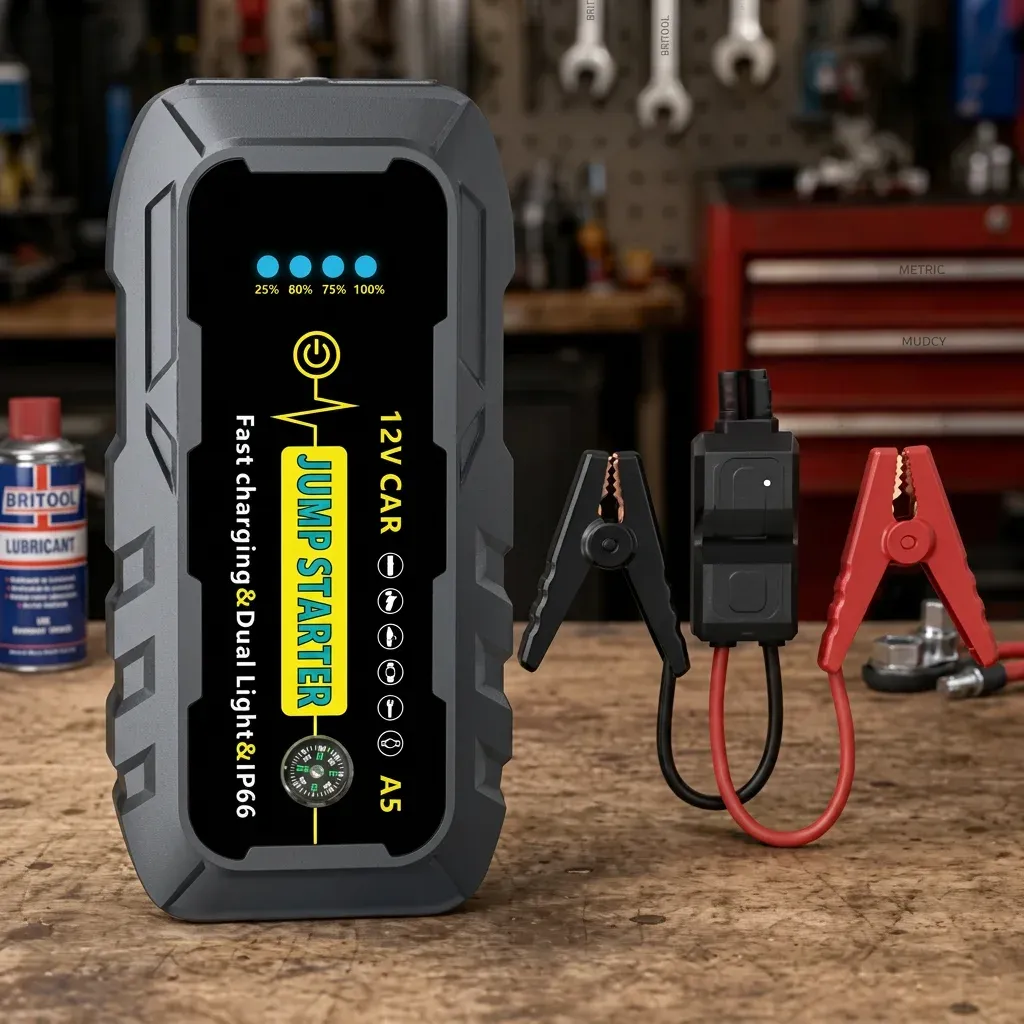
At SmartCharg, we focus on practical battery tools that solve real roadside problems. Our wider range is built around compact, safe power solutions such as portable jump starters and battery support products designed to help motorists get moving again without depending on another vehicle.
Key Takeaways
- Use a charger that matches your motorcycle battery type and voltage, usually 12V.
- Most modern bikes benefit from a smart charger with automatic charging stages and maintenance mode.
- Charge in a dry, ventilated area and connect the positive clamp first, then the negative.
- A slow charge is usually better for motorcycle batteries than a high-amperage boost charge.
- AGM, conventional lead-acid and lithium batteries require different charging profiles.
- For stored bikes in winter, a maintenance charger can help prevent sulphation and non-start issues.
Why motorcycle batteries go flat so often in the UK
The British climate is not kind to batteries. Low temperatures reduce battery efficiency, while irregular riding patterns mean many motorcycles sit for days or weeks between uses. Add alarms, trackers and parasitic drain from onboard electronics, and even a healthy battery can struggle.
The RAC has long reported seasonal rises in battery-related breakdowns during cold weather. In one winter period, the RAC said it attended around 11,500 breakdowns in a single day, with many linked to flat or failing batteries during freezing conditions (Source: RAC winter breakdown reporting). While that figure covers vehicles generally rather than motorcycles alone, it reflects how sharply battery performance drops when temperatures fall.
For riders who commute year-round or keep their bike off the road over winter, proper charging is not just convenient. It is part of reliable ownership.
What you need before charging a motorcycle battery
Before you start, gather the right equipment. Charging a motorcycle battery with the wrong settings is where many avoidable problems begin.
Essential items
- A compatible motorcycle battery charger
- The bike handbook or battery label details
- Protective gloves and eye protection
- A dry, well-ventilated space
- A clean cloth to wipe terminals if needed
Check the battery type first
The charger must suit the chemistry of your battery. Common motorcycle battery types in the UK include:
- Conventional lead-acid batteries
- AGM batteries
- Gel batteries
- Lithium motorcycle batteries
If you are unsure which charger features matter for lead-acid systems, see our guide to battery chargers for 12V lead acid batteries in the UK. It explains compatibility and charging behaviour in more detail.
Can you charge a motorcycle battery without removing it from the bike?
In many cases, yes. A modern smart charger can often be connected while the battery remains installed, provided you follow the manufacturer's guidance for both the bike and charger.
This is common when using fused ring connectors or an accessible charging lead routed under the seat. It saves time and makes routine top-up charging much easier during winter storage.
You may still want to remove the battery if:
- The terminals are difficult to access safely
- The bike has been standing for months in damp conditions
- You suspect corrosion or physical damage
- You need to inspect electrolyte levels on an older serviceable battery
How to charge a motorcycle battery with a charger: step by step
1. Turn off the ignition and remove the key
The bike should be fully switched off before any connection is made. That includes lights, accessories and heated grips if fitted.
2. Identify the battery voltage and type
Most motorcycles use a 12V battery, though checking matters. Read the label on the case or confirm in your owner handbook. Then match this with your charger's supported modes.
3. Inspect the battery before connecting anything
If the casing is swollen, cracked or leaking, do not charge it. Replace it instead. A damaged battery can be unsafe to recharge.
4. Set up in a safe charging area
Use a dry location away from sparks or naked flames. Good ventilation matters because some lead-acid batteries may release hydrogen gas while charging.
5. Connect the charger clamps or leads correctly
- Connect the red positive lead to the positive terminal marked +
- Connect the black negative lead to the negative terminal marked -
- If your charger instructions specify an earth point rather than direct negative connection, follow that guidance instead
6. Select the correct charging mode
p>A smart charger may offer settings for standard lead-acid, AGM or lithium. Choose carefully. This stage matters because each chemistry responds differently to charging voltage and current. h3>7. Start charging at an appropriate rateA lower amperage setting is usually best for motorcycles. High-current fast charging creates extra heat and stress that smaller batteries do not handle well over time.
h3>8. Let the smart charger complete its cycleA quality smart charger will move through phases such as bulk charge, absorption and maintenance or float mode automatically. That reduces guesswork and helps prevent overcharging.
h3>9. Disconnect safely once complete- Switch off or unplug the charger first if instructed by its manual< li >Remove the black negative connection first< / li >< li >Then remove t he red positive connection< / li >
- The batt ery will not hold voltage after full char ging< l i>The starter still turns slowly despite confirmed full charge<>/ l i>< l i>The casing shows physical deterioration<>/ l i>< l i>You repeatedly need top-up charges after short periods<>/ l i>
If you want deeper background on how multi-stage chargers work across common vehicle applications,
our full guide to UK 12V lead acid battery chargersa>.
A good buyer’s guide should make buying simpler rather than more technical. Focus on these points:Your UK buyer’s checklist before purchasing a motorcycle battery charger
<
li>Batte ry chemistry support: Lead-acid only, AGM-ready, or lithium-compatible?
<
p>T rust matters too. Buy from established UK retailers that clearly state compatibility information, support details and product specifications rather than vague generic listings.
SmartCharg aims to do exactly that: practical products backed by straightforward guidance so drivers and riders can deal with dead-battery problems quickly and safely.
C TA: Find th e right portable power solution f o r roadside confidence< /H2>
If y ou want backup beyond home char ging, SmartCharg offers compact emergency power products built around one simple promise: T he Ultimate Portable Car Jump Starter & Car Battery Booster Pack< /strong>. They are designed to revive flat batteri es without another vehic le, with safety-focused features packed into portable units that fit easily into everyday motoring life. < /P>
C an I use a car batter y charg er o n my motorcy cle batt ery ?< /H3>
S ometimes, but only if it supports th e correct voltage, battery type and low enough current output. Many car chargers deliver more current than small motorcy cle batteri es like. A smart unit with dedicated motorcy cle o r low-amp modes is usually th e safer choice.< /P
D o I need t o disconnect th e batt ery from th e bik e first?< /H3>
N ot always.
Many riders charge in situ using smart chargers,
especially when fused connector leads are already fitted.
Check both th e bike handbook an d charg er manual before doing so.<
/P
I n most cases,
yes,
provided it is a reputable smart charg er with automatic control modes an d used according to instructions.
That said,
always follow th e manufacturer’s guidance an d inspect cables an d connections before leaving it unattended.<
/P>I s it safe t o leave a smart charg er connected overnight?<
/H3>
Ready to secure your journey with SmartCharg?
Get Roadside Ready — £59.99